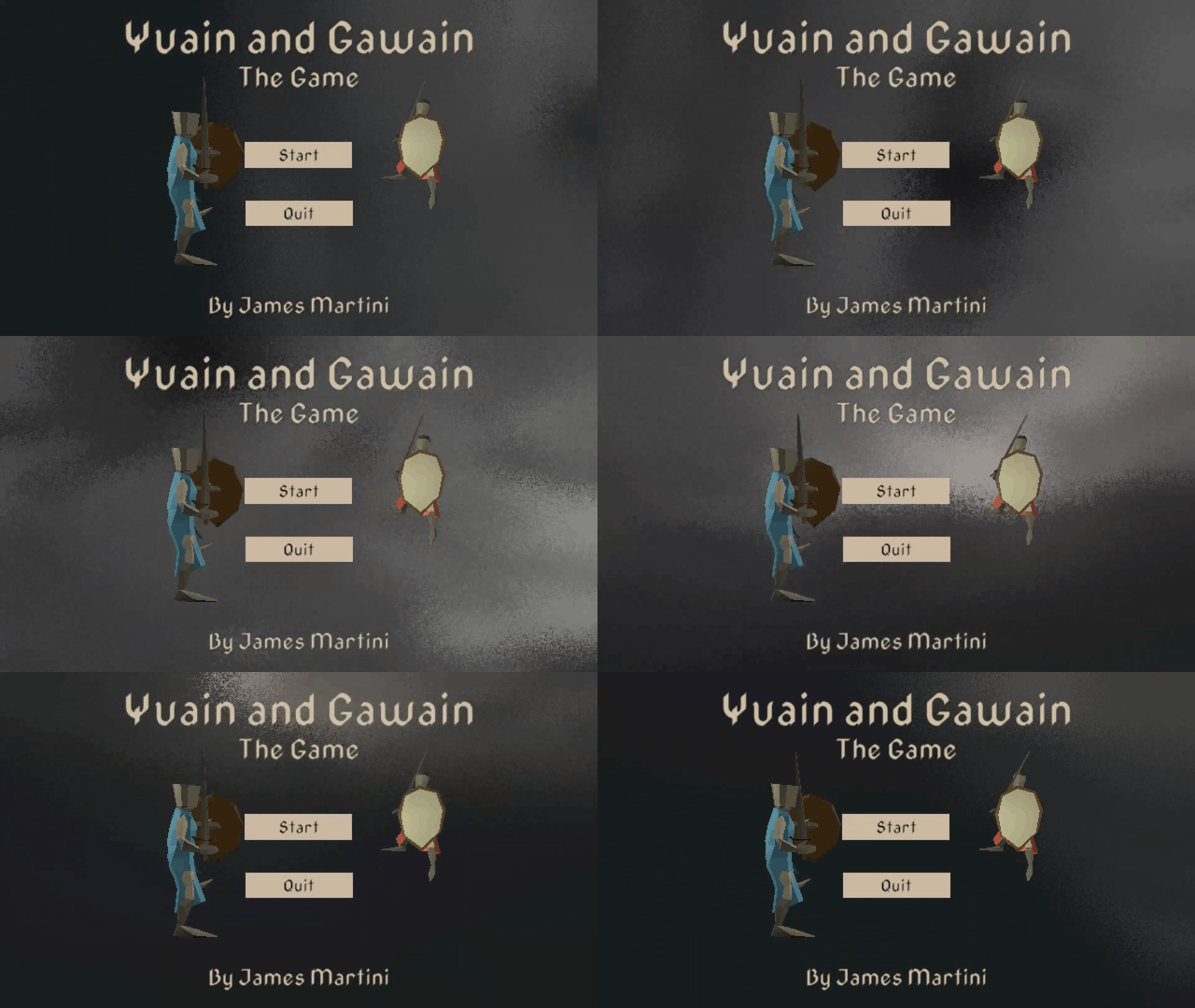
Yvain and Gawain: The Game is a small tactics-RPG based on the story Yvain, the Knight of the Lion, by the medieval French writer Chrétien de Troyes. The game explores the moment that two best friends, Yvain and Gawain, must fight each other in order to defend the honor of two women they just met. The only catch is that they do not recognize each other.
Yvain and Gawain
Yvain and Gawain takes de Troyes’ dense, dramatic, and often humorous work and tries to pull out the cores of its interesting components. The game significantly cuts around the texts’ extensive narration to pull out the lines and quotes that exemplify Yvain and Gawain’s powerful bond, and how that bond is modified by their unfortunate fight.
I specifically wanted to look at the queerness of the scene because while Yvain is technically a romance, the romance does not play much of a role in any of Yvain’s actions and definitely has no impact on this scene. Instead, this entire scene is initially driven by Yvain and Gawain’s blind pride but then, after the recognition scene, is driven by the passion that the two knights display for each other. I wanted to explore how the text depicts masculine bonds and how it tries to use the presence of women to distract from their potential homoeroticism. By extracting the knights from their environment both literally in their setting and also by only showing the lines that have to do with their direct bond, I highlight the depth of emotion that the knights feel for each other, a depth they do not demonstrate towards anyone else in the story.

Turn-Based Chivalry
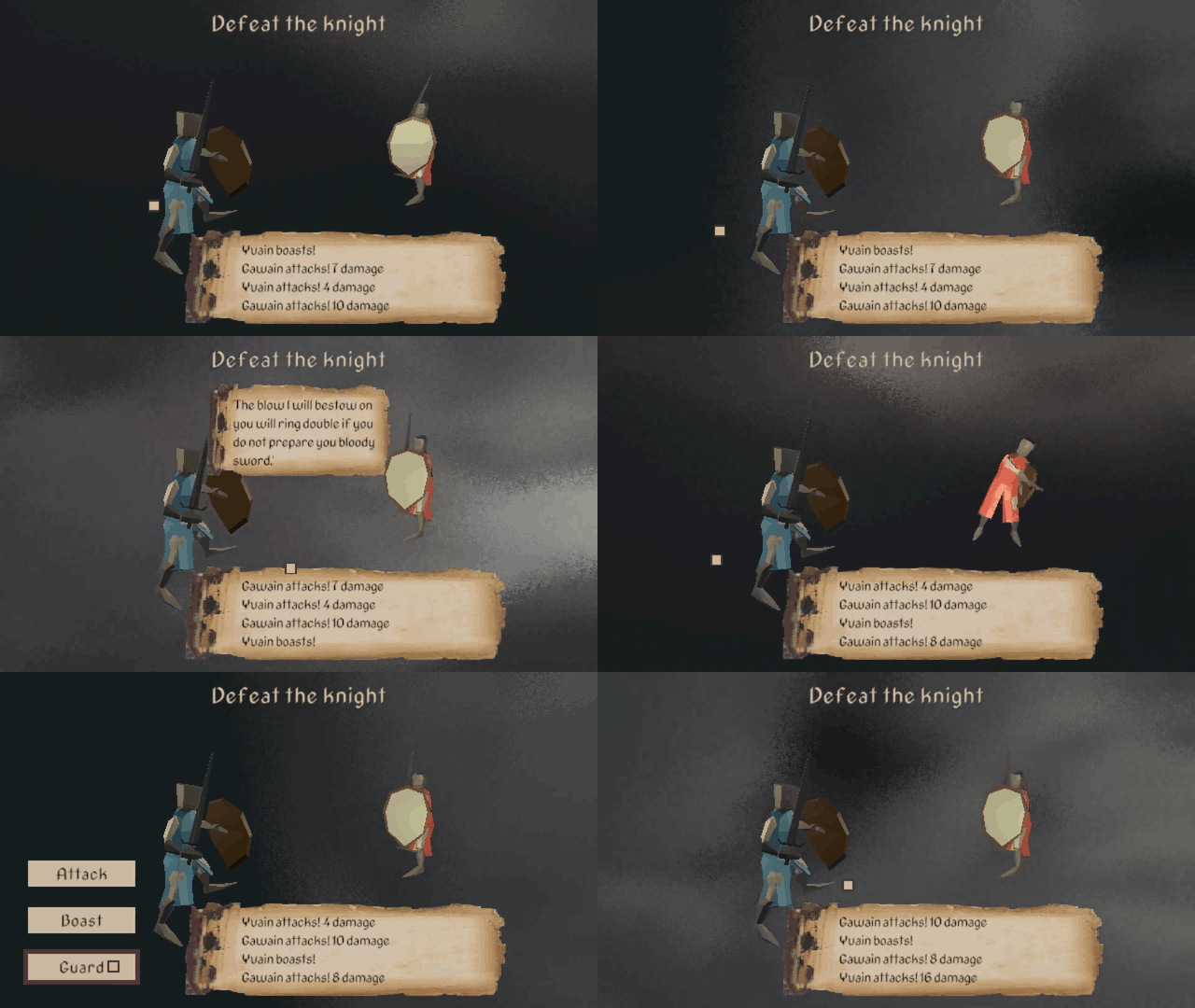
This turn-based RPG uses boasts as its buff/debuff system, bringing the themes of masculinity and chivalry into the system as well as the story. I wanted the boasts present because chivalry is designed, among other things, to defend the masculinity of the knights, and constantly asserting your power over other knights, both physically and verbally, is an important part of upholding and enforcing chivalric values. The knights, in the text, though, do not actually boast in their fight, so instead, I selected lines from after the fight, where the knights praise each other before the recognition scene, and inverted the praises to turn them into boasts. For example, instead of a knight saying “You stunned me with your blows,” they boast, “I will stun you with my blows.” This retains the tone of de Troyes’ text while giving me the boasts I wanted for the combat system.
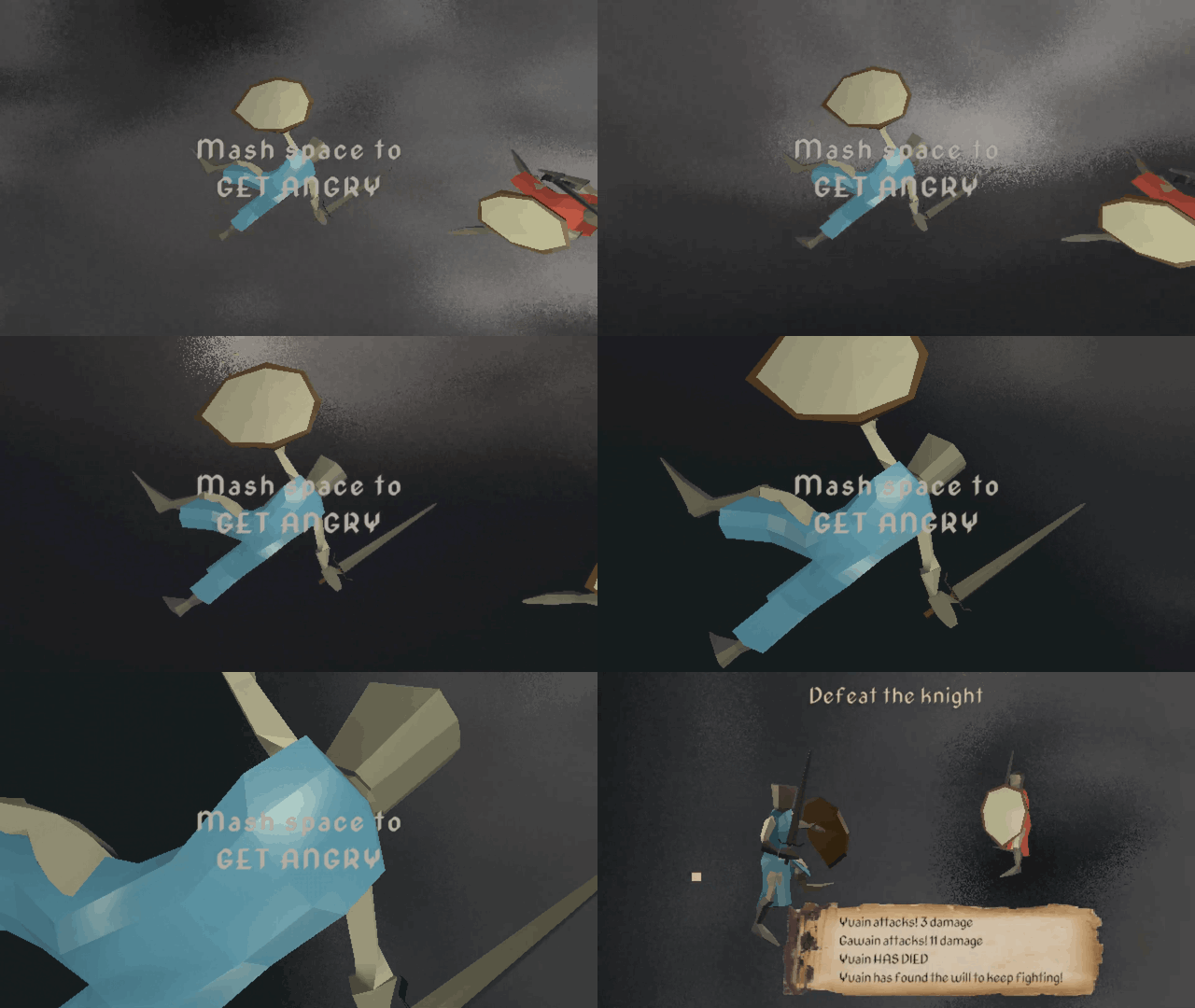
In addition to the boasts, death is a unique mechanic designed to capture the energy and anger that often drives knights in Arthurian romances. As a designer, I hate fail states in games (mostly because I think they’re annoying both as a player and a developer), so I wanted to make death a mechanic that enables you to bounce back. I was inspired by another of de Troyes’ romances, Erec and Enide, in which Erec dies or nearly dies a lot. Despite these deaths, though, Erec often bounces back angrier and more driven than ever, an attitude that I wanted to incorporate into the game. Dying in the game is just another opportunity for Yvain to prove how truly masculine and tough he is.
 James Martini