Book Club Issue #5: Metal Gear Solid and my year of loving the bomb
more like my year of loving raiden, but we'll get to that
The owls are not what they seem
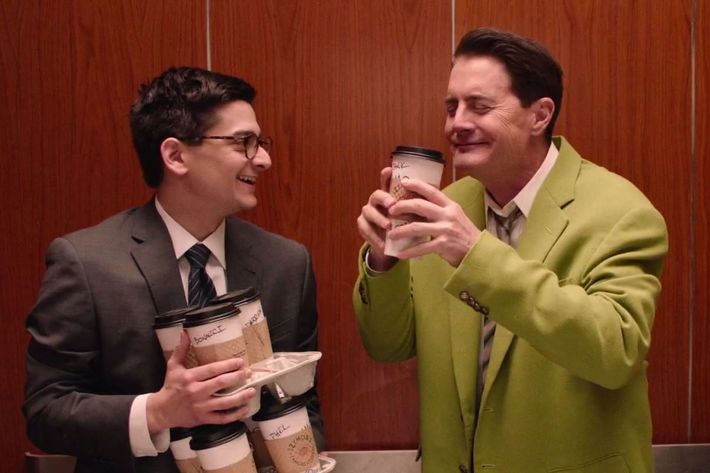
Early on in the year I decided to re-watch Twin Peaks for the first time in a while. I’ve watched the first two seasons several times but had only watched The Return once, so I figured I would go through it all again to set myself up for re-experiencing season three. Twin Peaks is, of course, one of the greatest works of art ever created, and The Return is the perfect finale for it. It’s also a very nuke-heavy show. This doesn’t come through quite as much in seasons one and two, but in season three, especially episode eight, it becomes clear how much of this show pulls from the concept of a nuclear America.
Shortly into the episode, a nuclear bomb goes off. For several minutes, the show hangs on the mushroom cloud, zooming ever deeper into the swirling puffs of smoke, before settling on a convenience store somewhere inside. Eventually the episode starts following this haggard, dirty man in the desert, as he wanders the rural roads, asking anyone he can find if they “gotta light.”
More happens, but I’m not here to tell you the plot of Twin Peaks (as much as I would love to do that). Ultimately, the episode presents the idea that the show’s main antagonist, BOB, was created through the detonation of nuclear bomb tests in the American desert. BOB is a pretty thinly veiled metaphor for the general concept of evil, or more specifically, the way that evil manifests in late-20th-century America. If we pair that concept of BOB as a representation of evil with the idea that BOB was created by nuclear weapons, it becomes pretty clear how Twin Peaks is a show about how the development of nuclear weaponry introduced a new, base layer of evil into American culture. The innate fear of utter destruction that exists simply from knowing about nuclear weaponry creates manifestations of evil that seem to lie at the very base of our consciousness.
------
"I don’t know what’s worse: getting blown up in nuclear war or having a 7-11 on every corner."
------
In a little detour (this is not one of the big three nuke stories I’ve encountered this year), this quote from the 1989 skater film Gleaming the Cube shows off what I’m getting at with Twin Peaks pretty clearly. In a nuclear America, everything must, by necessity be compared against the evil of utter nuclear annihilation. Is a capitalistic mega-corporation growing large enough to decimate all similar small businesses better or worse than getting wiped out by a nuke? Is the persistent pain of watching your life slowly deteriorate as it gets eaten up by a cannibalistic capitalist environment better than the immediate evaporation of a nuclear bomb? It sounds like a joke to say out loud like that, but there’s some amount of truth that makes these questions feel more poignant than you might expect. Twin Peaks is about the connections between all of these evils, tying them all back to the invention of nuclear weaponry. When you’re constantly aware of how a nuke can destroy you, your defensive instincts force you to constantly seek to grow your own power, in the hope that it could somehow act as a deterrent.
They make me do push-ups in Draag
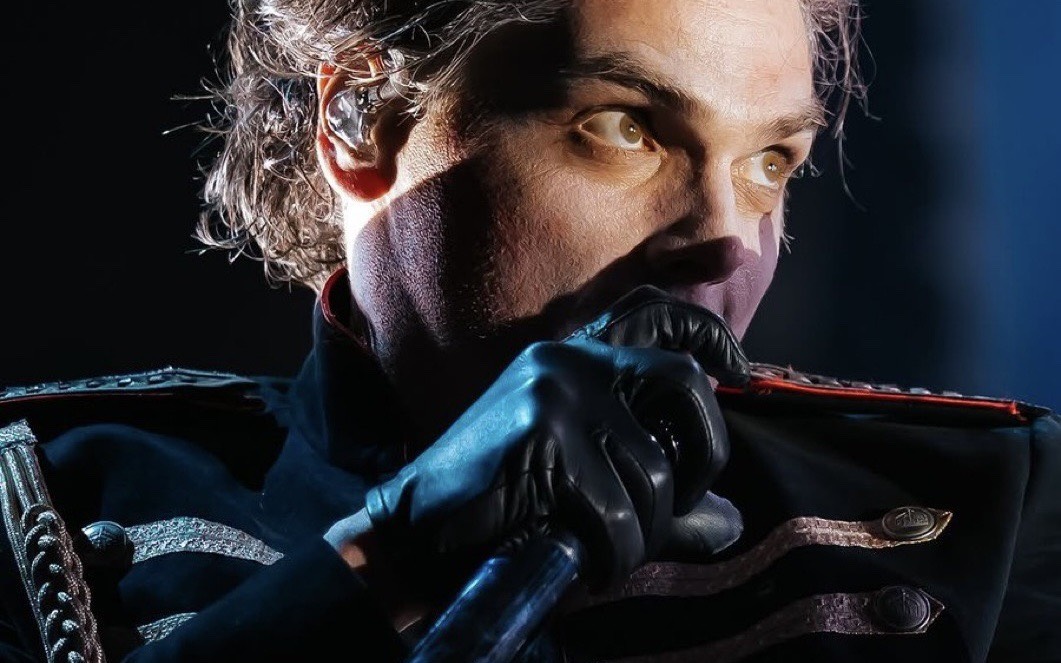
In July, I went to see My Chemical Romance’s tour, “Long Live the Black Parade”.
This tour celebrates the 20th (19th) anniversary of their mega-hit album The Black Parade. I like The Black Parade quite a bit (I like Three Cheers for Sweet Revenge more), and I love MCR, so I was excited for this show, not knowing anything about what they were actually going to be doing.
So imagine my shock when the show was about nukes.
If I had to sum up “Long Live the Black Parade”, I would describe it as a jukebox musical set to MCR’s The Black Parade, about a Soviet-era government in Eastern Europe launching a nuke in their last moments before collapse. It’s tricky to really discuss why this is, though, because, as a live concert, LLTBP feels more like it’s using the imagery and concepts of nuclear destruction to inflict certain emotions that the band feels lie at the core of The Black Parade rather than actually tell a story about nukes specifically.
In fact, perhaps it would help to look at it like this: It’s a common joke among a certain kind of person that you can draw a clear line from 9/11 to Fifty Shades of Grey. Here’s the line: My Chemical Romance formed as a band because Gerard Way was commuting to work in NYC when 9/11 happened, which moved him to channel his emotions into a band, inspired by the angsty hardcore and rock music he loved. Then, Stephanie Meyers, when writing Twilight, based a lot of Edward Cullen on Gerard Way (who famously loves presenting himself as a vampire). Lastly, Fifty Shades of Grey began as Twilight fan fiction before it became its own standalone work.
We can also extrapolate this backward, though. In the more serious geo-political world, it’s not hard to understand why 9/11 happened. Middle East terrorist groups don’t just hate America for no reason. They hate America because America and the Soviet Union fought over the oil resources in the Middle East during the Cold War, destabilizing many of the existing governments in the region, creating power vacuums that the terrorist groups filled. The Cold War, obviously, is really a collection of smaller proxy wars that were all fought because the US and Soviet Union were desperately trying to fight for power without resorting to using nuclear weaponry, because they understood the certain annihilation that doing so would have meant.
In this way, we can clearly see how the development of nuclear weaponry led to the Cold War, which led to 9/11 which led to My Chemical Romance, which led to Twilight, which led to Fifty Shades of Grey. I’m not really sure what my point here is anymore, but I feel like this will be relevant later. Maybe Oppenheimer regretted making the bomb because he had a vision of Robert Pattinson’s glistening, sparkly, nude torso as he tells Bella that “this is the skin of a killer.” Personally, I wouldn’t have any regret over that but I haven’t seen Oppenheimer so who knows.
Brother!!!!!!!!!
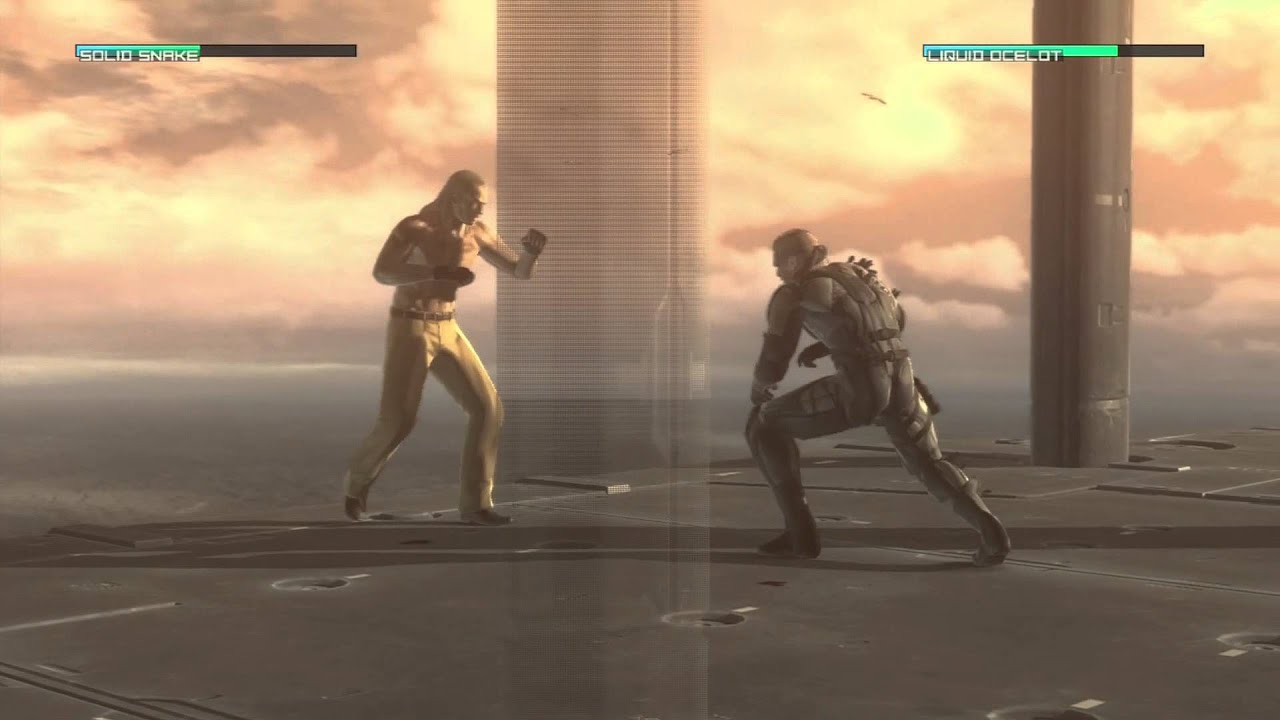
Lastly, around March or so of this year, I decided to finally play Metal Gear Solid.
For years now, I have known that I would love Hideo Kojima games. I knew enough about his style, interests, and reputation to know that his games were going to be games that I liked. Also because of this, I held myself back from ever playing his games, because I knew that once I did they would consume me. I was right.
I played MGS 1, and then immediately MGS 2, and then immediately MGS 3, and then immediately bought MGS 4 (I still have my old PS3) and played it as soon as it arrived. After finishing MGS 4, I took a brief detour to play a bit of Death Stranding, as I had tried to play MGS 5 many years ago and couldn’t get into it, so I decided to give it some time and check out DS, which I hadn’t played before. I played about half of DS, and also played MGS 2 and MGS 4 again, and then watched a playthrough of Peace Walker, and then played Ground Zeroes and a good chunk of 5, before realizing that I really couldn’t get into it and just watched a playthrough of the rest.
I probably don’t need to explain to anyone here that Metal Gear Solid is about nukes.
Metal Gear Solid is about a lot, but something that I found incredibly fascinating is the concept of The Boss. To explain these characters as straightforwardly as possible, The Boss is a woman who became a hero in World War II and earned a reputation as the greatest soldier of all time. She built and trained a team of other elite soldiers, whom she called her “children”, and one of them, codenamed “Naked Snake”, was considered the best of the best. In the 1960s, The Boss, in order to save face for the US, pretends to betray the US, essentially taking the fall for a mistake the US government made. After “betraying” the US, the government sends Naked Snake on a mission to kill her, which he does, and in her final moments, she passes her title of “Boss” to him, turning him into “Big Boss”.
Big Boss then goes on to form his own private militia that exists outside the control of any one government. Big Boss’ former commander, Zero (also called “Cipher”), starts a project to clone Big Boss, in the hopes of creating an endless supply of Big Bosses. They successfully create two (three, actually, don’t worry about it) clones of Big Boss, who get sent to work under him. These two clones are codenamed Solid Snake and Liquid Snake.
Eventually, Solid Snake kills Big Boss, which creates a new “Boss” vacuum, and Liquid and Solid Snake fight over who takes the mantle of “Boss” because, as Liquid claims, there can only be one Boss. (He’s actually wrong about this because in MGS 5, Big Boss recruits a member of Militaires Sans Frontières to take his place as Big Boss while he goes off to do other stuff so technically there were two Big Bosses for a while. I think Liquid didn’t know about that, though. It’s also not important here.)
It’s at this point that the lineage of The Boss completely dissolves. Solid Snake ultimately defeats Liquid, who dies*, theoretically giving Solid Snake the title of Boss, but Snake never assumes the title. He rejects it completely.
The story of Metal Gear demonstrates a kind of dissolution of masculinity. The games construct The Boss as the ultimate form of patriotic masculinity. She’s a war hero who is deathly loyal to her country. Even on more interpersonal levels, in MGS 3 she repeatedly asserts her masculinity over Naked Snake, like when she criticizes his style of close-quarters-combat as weak, or when she criticizes how feminine he looks when he is disguised as Raikov.
As the “Boss” title passes to Naked Snake, the title retains much of its masculinity as a soldier and leader, but the patriotism disappears. As a result of the Cold War, Big Boss is driven away from allegiance to any government and he tries to simply position himself in opposition to nuclear power in general, working to retain a semblance of balance as the numerous proxy wars of the era threaten to destabilize the world. To Big Boss, this is executing The Boss’ will.
Then, when the time comes to pass the “Boss” to Big Boss’ children, the title fails to stick anywhere. Liquid proves too weak to be worthy of the title, and Solid Snake rejects it. Is Solid Snake not masculine enough to take on the title? Or perhaps the most masculine thing Solid Snake could do in that moment was to let the title die?
And what about Raiden?
A lifeless room…almost like your empty heart
Raiden, who has not even been mentioned yet, is the protagonist of MGS 2 and a main character in MGS 4. He’s probably my favorite character in anything ever. I love Raiden. But who is he?
When Raiden is introduced at the beginning of MGS 2, he is addressed by his code name, Solid Snake. Don’t worry, it’s supposed to be confusing. It’s not relevant to us here, but in MGS 2, Raiden is called Solid Snake, Solid Snake is there but goes by the name Iroquois Pliskin, and the secret third clone of Big Boss, Solidus Snake, is also there, also claiming to be Solid Snake. None of this is relevant to us right now, though, so just ignore it.
Raiden may be called Solid Snake, but make no mistake, he is not Solid Snake. He’s blonde, for starters, which is more significant than you might think. He has the most feminine hips ever put to a video game character, also pretty relevant here, and he’s a complete and total, utter failure.
As the plot of MGS 2 wages on, it is eventually revealed that Raiden was assigned the code name “Solid Snake” because the Patriots, an AI governing body the runs the US, decided to see if putting an elite soldier through a perfect recreation of the Shadow Moses Incident from MGS 1 could effectively create a Solid Snake-like soldier.
While Raiden does successfully stop Solidus from launching the nukes (or whatever it was he was trying to do), Raiden, on every level, fails to become Solid Snake.
From the Patriots’ perspective, their experiment was a failure, but I don’t think it’s a coincidence that MGS2, the first Metal Gear game to release after 9/11, features a character who is on all fronts significantly more feminine than Solid Snake, the only protagonist of the Metal Gear franchise up to that point1.
According to the Metal Gear Solid Wiki page on Raiden, “According to [art director] Shinkawa in the featurette "The Making of Metal Gear Solid 2", the primary reason why Raiden is designed as a bishonen (a ‘pretty boy’) is because a fan letter stated that the addresser in question did not want to ‘play a story with an old man.’”2
This quote is hilarious, but it also gives us some pretty critical information about Raiden: he was designed from the first pass to resemble a woman. I mean, just look at the concept art Shinkawa drew up for my boy*.
Now I may not know much, but I know that that’s a beautiful woman.
This goes a lot further than just character design, though. In the game itself, when Raiden goes to save the president of the United States from being held hostage, the president assumes that Raiden is a woman sent to assassinate him and, well, to use a term coined by a different POTUS, “grabs Raiden by the pussy”. Only, of course, Raiden doesn’t have a pussy, leading the president to be shocked at finding out Raiden is a man, which then instigates the conversation where Raiden tells the president that he’s there to save him.
Think what you will of this moment, this is only the second-gayest crotch grab involving Raiden that happens in the MGS series. In MGS 3, there’s a character, Major Raikov, who is modeled to look like Raiden. Remember that time The Boss makes fun of Naked Snake for looking feminine while disguised as an enemy soldier? He’s disguised as Raikov, who looks exactly like Raiden. While disguised as Raikov, though, Naked Snake runs into Commander Volgin, the game’s main antagonist. Raikov is Volgin’s sub—orry—subordinate—sorry—sub. I was right the first time. When Volgin runs into Naked Snake, Volgin confidently exclaims that he was waiting for Raikov in his room and then, when he grows suspicious of Naked Snake, decides to execute the only move that can confirm for certain if the man in front of him is his lover or not: he grabs Raikov’s crotch. Volgin, knowing his lover well, recognizes that those are not, in fact, Raikov’s genitals and asks who he is.
I mention all of this to establish that in this broad chain of Bosses and Snakes, Raiden is the ultimate failure.
If we treat The Boss as the absolute pinnacle of masculinity, as the games set her up as, we can see that patriotic masculinity deteriorate as the title passes to Big Boss, then to Solid Snake, and then lastly to Raiden, the government’s last-ditch attempt at recreating The Boss’ supremacy.
Raiden is, in essence, an absolute, total failure of masculinity.
Remember the path we traced from the invention of nuclear weapons to Fifty Shades of Grey? I told you that would be relevant. Notice in that trace that, right around 9/11 there’s a sudden shift from war history to pretty boys pretending to be vampires. Doesn’t that sound familiar? It’s shockingly similar to the transition from Solid Snake, the last soldier in the Boss’ lineage, to Raiden, an effeminate pretty boy who…well…he has sexually-charged fights with a vampire, which is close enough.
Of course, as noted before, 9/11 isn’t critical to this shift, as Raiden was designed and written before 9/11 happened, but all of this (9/11, Raiden, MCR, etc.) happens in response to a shifting political climate as the world attempts to move on from the Cold War and into a more “peaceful” time. As war, as it was known in the mid-20th century, continued to collapse, and the internet brought a new information landscape to the world, everyone all over the place scrambled to figure out what power even meant anymore.
MGS 4, chronologically, is the final canon game in the Metal Gear timeline. Can you guess what they do to my boy Raiden in that one?
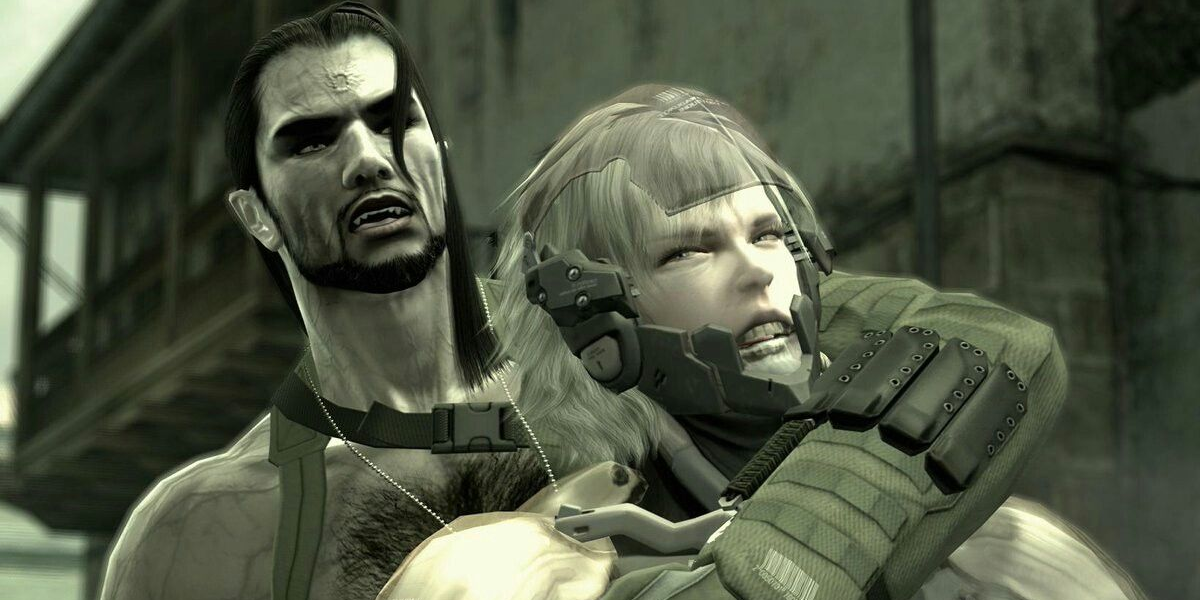
Well, for starters, they give Raiden cunty heels and fake nails, and then force him into multiple, extremely homoerotic fights with Vamp, a character maybe named that because he’s a vampire, maybe because he’s bisexual.
Metal Gear Solid 4: Guns of the Patriots is a fascinating game. For starters, Liquid’s back. After he died in MGS 1, Ocelot, who I have not mentioned up to this point, but for all intents and purposes, is something like a steward of the Boss title, who acts to guide its passing from one person to the next, grafts Liquids arm onto his body which allows Liquid’s consciousness to occasionally take over his mind. By MGS 4, Liquid has completely taken over, changing Ocelot’s name to Liquid Ocelot because he’s Liquid in Ocelot’s body3.
Then, Raiden got married, had a son, abandoned them, became a cyborg super soldier and started doing something with Eva from MGS 3. Oh, also, he got those nails and heels and fought Vamp a bunch.
In a more militaristic sense, government militaries have all but disappeared in MGS 4, and have been replaced by private military companies, or PMCs. In the true evolution of a post-nuclear, capitalistic world, countries have fully outsourced their proxy wars to private companies who now face off without allegiances to anything but the money dangling in front of their faces. Liquid Ocelot has taken control of a PMC and is trying to take control of the Patriots (well, more specifically, JD, the AI that now has control of the Patriots or something like that) so he can take over all of the PMCs and rule the world as the true Boss or whatever he’s up to. Liquid is more action than plan, but you better believe that everything he’s doing is in service of him becoming the new Boss. That’s never in question.
Honestly, I’m not totally sure where I’m going with this but I want to make it very clear that Metal Gear Solid 4 is not a masculine game, which I mean in the best way possible. It’s a near-future sci-fi game that images a world where war and the military-industrial complex has devolved down to the point of a bunch of cyborgs without borders flip-flopping sides at will because they, in a way, have lost all sense of what it means to be masculine.
The Boss’ masculinity stemmed from her status as a war hero. She lived and died a true patriot. Big Boss, Zero, and Ocelot then spend the rest of their lives trying and failing to live up to her standard of masculinity. Solid Snake, dejected by their failures, attempts to ditch it entirely, but because of his blood connection to Big Boss, is stuck with a bastardized version of that masculinity. Lastly, Raiden, stripped of his country and his body, is left an effeminate cyborg, desperately trying to find a new way to live in a new world. Like Gerard Way when he dressed up like a vampire or something.
As I frantically write out this idea that I’ve been ruminating on for like six months now, I’m starting to run out of steam. I’m not sure where to lead this back to, or if I even need to lead it anywhere at all. It’s just a book club after all. This is the sort of thing that if I was in grad school or a PhD candidate I would be writing an entire thesis, or even book about4. Believe it or not nuclear warfare is pretty complex. I think I’ll leave it with these questions that I wrote down somewhere back when I was talking about Gerard Way dressing up like a catgirl:
In the face of ultimate, unstoppable power, what does it mean to be masculine? Can one build a personality on their strength when they know that they will always be inferior to a greater power?
In some way, it feels like Twin Peaks, “Long Live the Black Parade”, and Metal Gear are all about these questions.
The internet tells me that there’s a crisis of masculinity happening or something like that. Now I’m not going to comment on that because—and I cannot stress this enough—I do not care about what men on the internet are complaining about, but after you read enough articles about men identifying as “pornosexual” because they’re scared to talk to women, or men sending women death threats because women are scared to talk to them, you start to feel like this is an entirely self-inflicted problem.
I glanced over it at the start because it didn’t feel relevant to point out when it came up, but The Boss is a woman. For as much as is made about women-written-by-Hideo-Kojima, it feels particularly significant that the absolute beacon of masculinity is a woman, and the series is about all the men who try and fail to be as masculine as her.
Not to be all “men used to go to war…”, but men used to go to war and now washing your hands makes you a woman?????????
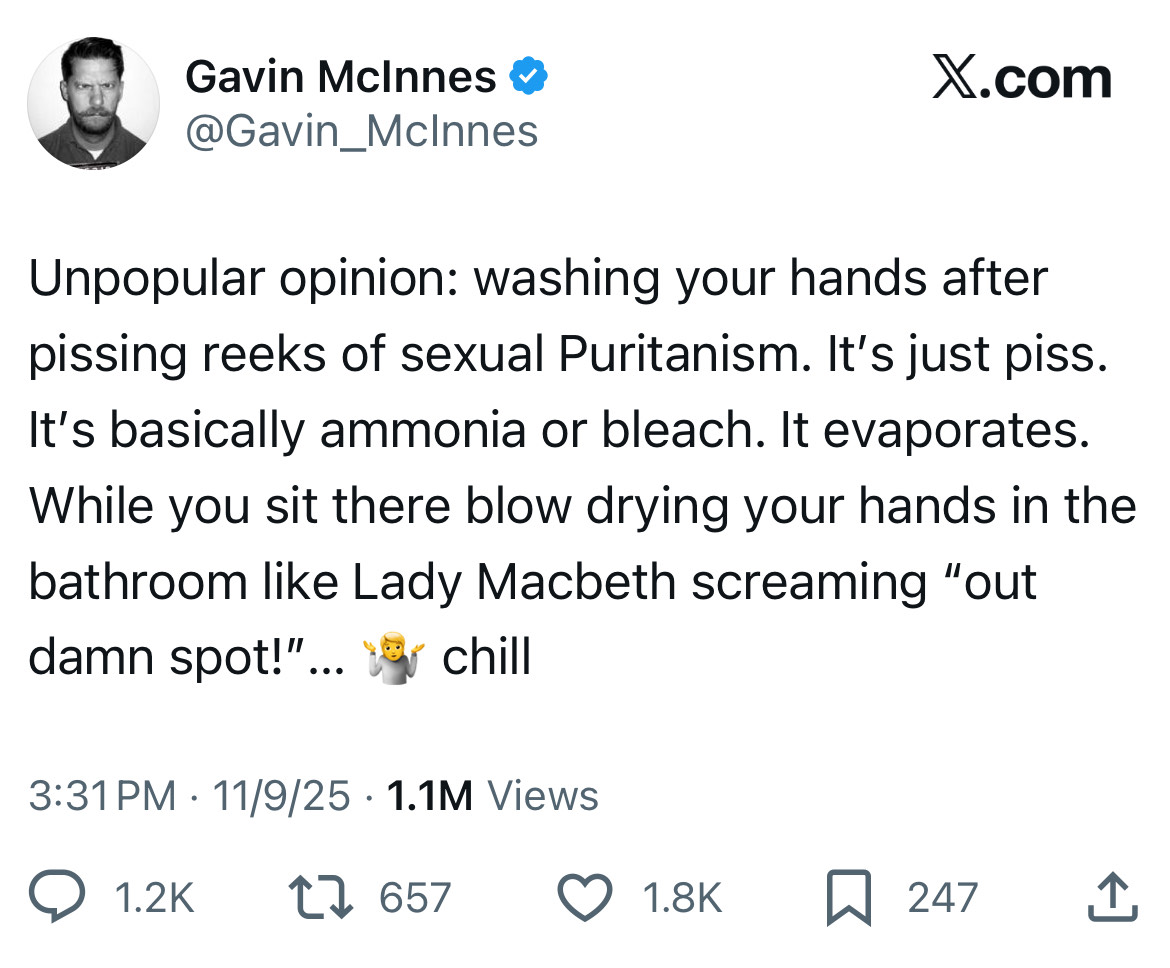
Anyway, that’s what Metal Gear Solid is about. Or something. idk5
It’s worth noting that I’m not claiming 9/11 directly influenced MGS 2 in any way, as the game came out only a couple of months after it happened. I’m just pointing out that Kojima was likely writing in response to a lot of the global political and social factors that also resulted in 9/11. Or something like that. I guess a footnote isn’t quite enough space to really make a claim about what/who caused 9/11, let alone how those same factors caused Metal Gear Solid 2, the video game.
It’s neither here nor there, but giving the literal translation of bishonen here is a gross disservice to both Raiden and bishonen at large. Bishonen doesn’t just describe pretty men, it’s a term used to describe feminine, androgynous men, who often look a lot like women. Like Raiden.
If i wanted to spend more time on this you know that I would be talking a lot about Ocelot, maybe the single gayest character in the entire franchise. In a sense, and I don’t mean this as a joke, Ocelot is the main character of the Metal Gear series, and there’s a lot to say about him. For now, though, just know that Ocelot, a notoriously feminine man, is something like a steward of The Boss’ masculinity, ensuring that anyone attempting to take control of it, is worthy of doing so.
Is this foreshadowing for what I’m going to do with the rest of my life? Only time will tell...
(I never found time to mention it during the main post, but in the MCR show there’s a moment where one of the main soviet government guys comes out to do a little burlesque drag scene to “Blood” before he suicide bombs the nuclear facility. After I recovered from the genuinely quite intense shock of the numerous explosives they detonate, I turned to my sister and went “Fatman-type moment”. That one’s for the real MGS 2/MCR heads, which I’m fairly certain is me, my sister, Hideo Kojima, and the one guy I saw wearing an MGS Peace Walker t-shirt at the MCR MetLife show.)