Book Club Issue #3: Session: Skate Sim
Full title, "Session: Skate Sim reminds me that video games are a corporate shithole cosplaying as art", but that's kinda long
Editor’s Note: I wrote this over two months ago and just sat on it because it’s too long and I feel like Session made me angrier than it needed to. I’m going to leave some footnotes throughout with more up-to-date thoughts. Also there won’t be images here because that’s a pain and I’ve already wasted too much time thinking about this game.
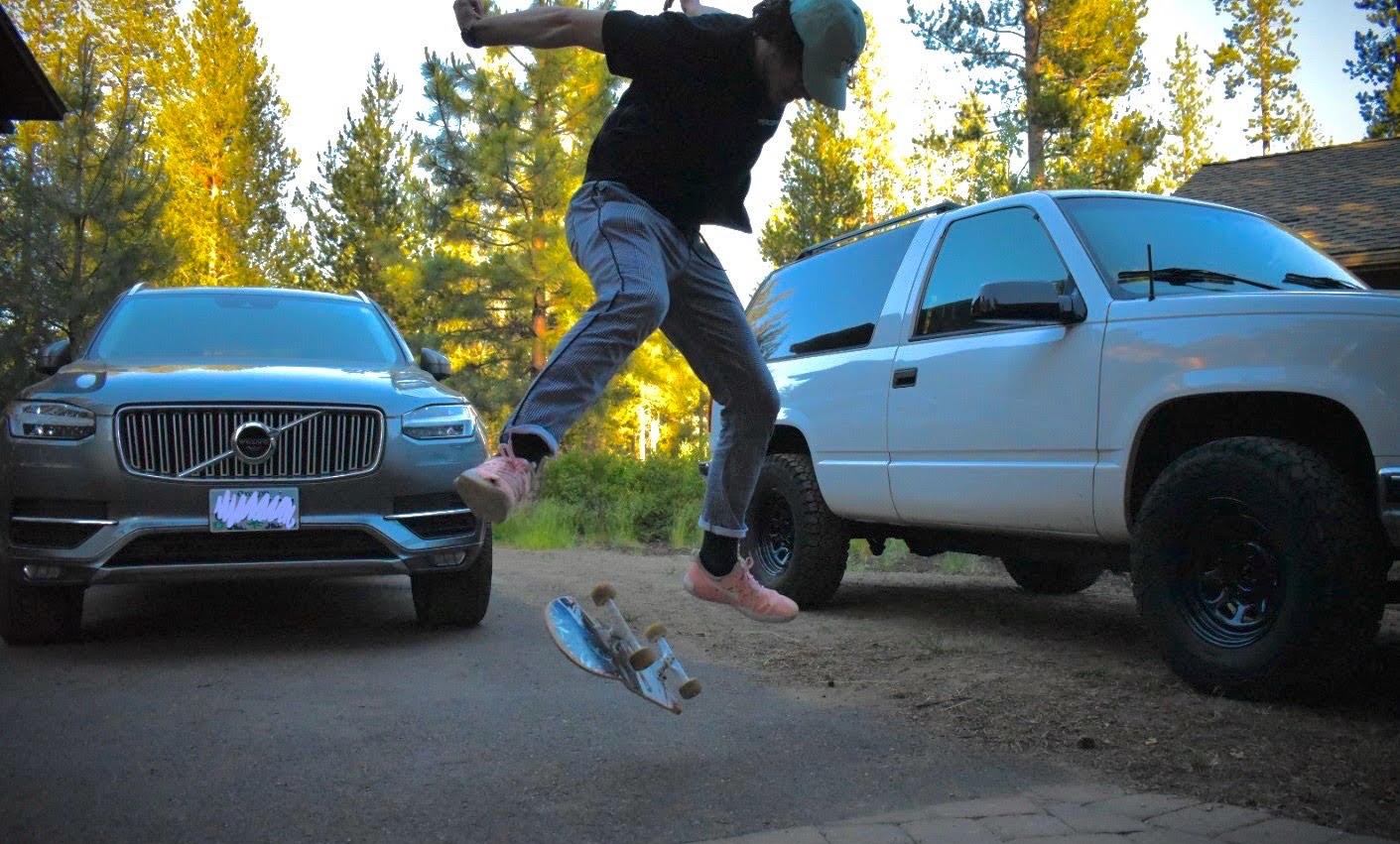
(the cover image is me kickflipping from over five years ago. don’t worry about whether or not i landed it.)
Listen, I fully intended on writing about Metal Gear Solid after Pierre, a topic that almost everyone would have found dramatically more interesting. I had even written MGS into my post as the next topic to write about. But then I revisited Session: Skate Sim for the first time in a few years and it made me so mad that I need to just let loose a little bit.
For the uninitiated, the skateboarding game genre, for reasons both understandable and incomprehensible, is one of the most famous, well-regarded genres in all of video gaming. Despite the ubiquitous love that gamers and skaters alike have for the genre, the entire practice is propped up by two franchises (Tony Hawk’s Pro Skater and Skate), published by two gargantuan media conglomerates (Activision and Electronic Arts), and neither franchise has had even a slightly noteworthy release since Skate 3 in 2010.
These two franchises have all but completely fallen apart, largely as a consequence of their publishers’ relentless desires to destroy the very fabric of their businesses. THPS’s publisher, Activision, has, since the release of Tony Hawk’s Proving Ground, the last game in the franchise developed by original developer Neversoft, merged with another mega-corporation not once, but twice. First with Blizzard, who you may know for making World of Warcraft and Overwatch, and then Activision-Blizzard merged with Xbox (and King), owned by Microsoft).
Have these two colossal mergers that fly in the face of everything antitrust laws are supposed to stand for helped Activision make more money you ask? Great question. No!
Despite it all, Microsoft-Xbox-Activision-Blizzard-Zenimax-Bethesda-King has been downright plagued by layoffs for the better part of two years now, largely targeting the very Activision-Blizzard and Zenimax-Bethesda studios that Xbox burned billions of dollars acquiring in the first place! The general sense in the industry is that Xbox, Microsoft’s Covid darling, has become such a bloated, unproductive mess of middle management that it’s not even capable of producing its own hardware anymore and we very likely have already seen the final Xbox home console launch ever.
Let’s circle back for a minute. Neversoft, the massively successful video game studio that created not just THPS but also developed several of the best Guitar Hero games? Activision shut that studio down in 2014 and merged it into Infinity Ward, one of the several studios tasked with the truly hellish mission of making military-industrial propaganda machine Call of Duty until the sun burns out.
Electronic Arts, meanwhile, has been going through something of a corporate crisis itself in the past 15 years. Since Skate 3’s 2010 release, EA has managed to avoid flagrant antitrust violations for the most part, but has otherwise been probably worse-off than Activision. Quickly, EA Black Box, the developer of the Skate franchise in addition to many of the Need for Speed games, among other games, was shut down in 2013, seemingly as a part of EA’s desperate attempt to focus on the free-to-play and mobile spaces that were so popular at the time.
That failed, obviously, but EA’s trend-chasing attitude never says die and shortly after that—in 2014, to be exact—Bungie’s smash hit Destiny launched, effectively introducing the world into what has become known as the “games-as-service” model. As the vapidly-corporate term implies, “games-as-service” games are games that are not, actually, games but in fact subscription services. It’s a sort of the modern form of the MMO format that made World of Warcraft so popular (man, maybe Blizzard—sorry, Activision-Blizzard, should have toughed that one out). It emphasizes regular, paid “content”1 releases that allow what would normally be a one-time purchase “premium” title to be an ongoing, ten-year-long hellhole that resembles a mobile gacha game just as much as it resembles Halo, or whatever other premium title it’s ripping off (although, because of Destiny’s popularity, it’s usually Halo).
There are a lot of points to bring up when talking about EA’s desperate attempts to make Destiny 2 (oh, wait, Bungie already made that), but here are a few notable ones:
First, EA functionally gutted its sports game divisions. This is not quite as relevant to Skate as you might imagine, because the Skate franchise shut down shortly before all this happened, but EA took all of its beloved sports games like Fifa (now EA FC because not even Fifa wanted to be associated with them), Madden, EA College Football, and more and turned them into disgusting, buggy, broken, pay-to-win messes that sort of miss the whole point of a live-service game. Like, if the point of a game as a service is for that one game to exist for 10+ years, why are you doing yearly releases that disincentivize players from investing money into the game?2
(It’s also worth noting that Skate is actually coming back, but it’s developed by a new team and will be, if you can believe it, a trashy live-service free-to-play game. Sorry, I lied when I said that Skate had avoided this fate.)3
Second, EA owns this studio called BioWare, that you may have heard of. They made this game series you may have heard of, called Mass Effect. Mass Effect, as you may have heard, was really good and then got really bad, really fast. Well, to be honest, it didn’t get that bad, but Mass Effect 3 was definitely not received super well and Andromeda was such a broken mess it never got a fair shot to begin with. Regardless, BioWare wanted to take a stab at something new and started working on a new project that would eventually become titled Anthem. Anthem, as you might expect by its inclusion here, was such an utter disaster from top to bottom that it probably has one of the most well-reported-on development cycles of any game ever.
Sparing you the gritty details, Anthem was completely plagued by indecision and wild expectations through its entire development process. To support the additional work that it would require, they just started throwing other EA-owned teams at the project with no real concern for who was going to do what or what anyone’s skillsets were. EA wanted a big budget Destiny competitor and, as far as it was concerned, it had the manpower to do it. Have you ever heard of Anthem? No? That’s probably enough to clarify how much of a flop it was.
Lastly, EA owns this studio called BioWare, that you may have heard of. Oh, wait, we’re still talking about them? That’s not good. See, BioWare, in addition to making Mass Effect, one of the most critically-acclaimed action series of all time, also makes Dragon Age, one of the most critically-acclaimed RPG series of all time.
We’re over a thousand words into this and still haven’t even hinted at the title game of this article so let’s move on and just say that Activision and EA, the publishers of the only two notable skateboarding game franchises are financial disasters that have shed themselves of any talent capable of actually shipping a good game in favor of a never-ending string of corporate “decision makers” who don’t actually know what a video game is.
Hearing all this, you might think that there’s a vacuum in the skateboarding games market. Crea-ture Studios thought this as well, and in 2017 launched a demo for and then quickly a Kickstarter for a game that would eventually be titled Session: Skate Sim.
The elevator pitch for Session is pretty simple: Imagine a spiritual successor to the Skate franchise that focuses on realism and a more complex control scheme.
On this front, the market, then, for Session is also pretty easy to see. People like skating games and people like sim games, and people love those Dark Souls games. What if we just took all that and put it into a game? Pretty good, right?
I do think that Session has a pretty incredible concept.
I have tried to think of the best way to explain Session in practice, though, and the best I can come up with is a skateboarding industry metaphor: Session sort of feels like Cariuma of skateboarding video games.
So let’s continue not talking about Session for a little bit longer so I can explain that.
In the early 2000s, the skateboarding world underwent something of a massive transformation. In a very short span of time, a handful of major athletics companies (specifically ones that make shoes) became very interested in entering the skateboarding market (a market in which the majority of people need to buy new shoes at least every few months). The big one we’ll highlight for this exercise is Nike, and their skateboarding brand Nike SB.
Nike SB launched in 2002 with their flagship shoe, the “Nike SB Dunk Low” (you might have heard of it). Shortly after that, Nike SB signed pro-skater Paul Rodriguez to skate for them. In the skate world, “skating” for a company means that you receive some amount of salary to compete and film video parts while wearing designated merchandise for the company. In Nike’s instance, this almost always means wearing Nike shoes, often custom shoes made and sold as your signature shoe.
Over the course of the 2000s, Nike, alongside other companies, especially Adidas and New Balance, barged their way into the skate industry by using their immense capital relative to “core” skate brands like DC and Etnies and ultimately emerged as the primary brands in the skateboarding space.
(It’s not really relevant to the point here, but it’s fun to note that Nike’s timing with Nike SB indicates that Tony Hawk’s Pro Skater definitely played a role in Nike’s decision to join the space.)
Skateboarders love to complain about these brands and how they’ve bought their way into the skate space, but, ultimately, it’s hard to actually say much about them when your favorite skaters’ favorite skaters, Shane O’Neill and Mark Suciu ride for Nike and Adidas, respectively. Potentially the two greatest competition skaters of all time, Nyjah Houston and Yuto Horigome, both ride for Nike. The skaters that people love ride for these brands, so it’s hard to say that they’re not important parts of the skate world.
This is a fun way of saying that while these brands bought their way into the skateboarding space, they did so by buying smart. They intentionally targeted real, good skaters that were well-liked and well-respected in the community. Beyond that, they also just simply make the best products. Good luck finding a skater who skates in shoes other than Nike, Adidas, or Vans, because there just aren’t companies making better shoes than them. (New Balance is definitely the next most popular brand, but even they’re probably well behind those big three.)
Now we get to introduce you to Cariuma. If Nike and Adidas bought their way into the skate space by signing the best skaters in the world and making the best shoes you can buy, Cariuma is trying to buy their way into the skate space by signing skaters you’ve never heard of and making the ugliest shoes you’ve ever seen.
Cariuma was founded in 2018 and has already become an inescapable reality of the skate world.
Cariuma’s approach to entering the skate scene seems to have less to do with signing good skaters and making good products and more to do with just slapping their logo on literally anyone or anything they can.
To get the best image of this, take a look at the YouTube page for The Berrics. The Berrics, owned by Steve “I’m a Scientologist” Berra4, was never a paragon of skate culture, but was, at one point, a reasonably popular channel that reputable skaters really did want to be on. It was one of the first big skateboarding channels and they did pretty fun competitions, especially their “Battle at the Berrics” series of tournaments where skaters compete in head-to-head games of S.K.A.T.E..
Nowadays, though, any goodwill Steve Berra had has completely disintegrated as The Berrics have blatantly prioritized trendy influencers and YouTuber-y tactics over just showing real, good skateboarding.
Nowhere is this more prevalent than the absolute disgusting integration of Cariuma into every aspect of their business.
I’m not joking when I say that I clicked on a Berrics video at complete random, and both skaters are wearing blank t-shirts with the ginormous, fuck ugly Cariuma logo slathered onto their chests. It’s inescapable. Good luck finding even a single video not flagrantly inundated with blatant Cariuma sponsorship on the Berrics page.5
As a side note, when I went to look for a list of Cariuma skaters to see if they had a list of all the influencers they sign (they definitely used to have one but it looks like it doesn’t exist anymore), I came across their team page, where they list Leandre Sanders. My immediate thought upon hearing his name was, “Well that guy’s an influencer, not a pro skater. He doesn’t compete or shoot parts or anything. He’s just an Instagram guy”. This felt kind of mean, though, so I wasn’t going to say anything, but then the random video I clicked on without looking had Leandre Sanders in it and now I feel validated. This guy’s not a real skater. He’s an influencer.
Also, the other guy, Cody Cepeda, sounded vaguely familiar as well. Turns out literally every single YouTube search result for him is a Berrics video. I’m not sure this dude has ever even left the Berrics. He might live there. I don’t know.
You know, they used to have guys like Nyjah and Shane O’Neill on the Berrics. It wasn’t always like this. I promise it used to be at least somewhat relevant.
Anyway, I bring all of this up to contextualize Cariuma so that it makes sense when I say that Session: Skate Sim’s relationship to both skateboarding feels about as authentic as Cariuma’s.
Session, as I said before, has a really good concept. Its concept almost entirely centers around its control scheme, which expands Skate's controls into a more complex system that uses both sticks for trick input. Each of the two sticks match to one of your character’s two feet and you need to use both sticks to execute a trick. For example, if an ollie in Skate requires you to pull down on the right stick and then flick up on the right stick, Session requires you to pull down on the left stick (lean back on your left foot) and then flick up with the right stick (scrape up with your right foot).
(PSA: Session defaults to mapping the left stick to the “front foot” and the right stick to the “back foot”, which is terrible. It works fine at first but starts to get really confusing when you start doing fakie and switch tricks. Go into the settings and change the controls to map left-to-left and right-to-right. It takes a second to wrap your head around but is much better long-term.)
Reading reviews of Session, you’ll see many people talk about Session’s difficulty. They’ll talk about how complex but rewarding the controls are and how much more “realistic” the controls are than THPS or Skate. I disagree with this. In fact, I would say that Sessions’s controls are actually easier than Skate’s, because separating out the tricks into two sticks means that the input required per-stick is actually much less precise and easier to execute. The learning curve is stronger, sure, but ultimately the mechanics of input are easier to the player.
So, then, why do people say it’s so difficult? What’s the challenge?
Well, uh, the game is super broken. Like…busted.
Specifically, grinding in Session is an absolute nightmare. In THPS and Skate, when you want to grind in the game, the game has a way of, in mid-air, guiding you onto grindable objects so that you can more easily get into and out of clean grinds. Session, on the other hand, does not have this grind guidance, or at least has it to a much lighter extent.
Session relies heavily on its physics system to handle grinds, putting the player in near total control over getting onto the grindable surface and then letting its physics system handle what happens once you’re on it. This, in theory, might work well. I mean, that’s how it works in real life. The skater gets onto a grindable object and then physics handles what happens on the surface. In practice, though, Session’s physics are enough of a mess that it feels like a complete gamble as to whether or not the game will allow you to grind an object, regardless of your input.
Additionally, this approach completely ignores the question of why other skate games have lock-on grinds in the first place. Are they there to make grinds easier? Sure. But why do you need to make grinds easier? Well, Session and its supporters would tell you that this is because skateboarding is very hard, so these games put literal guide rails onto some of the harder tricks (e.g. grinding) to avoid player frustration. Session’s vision for its mechanics is that it shouldn’t hide you from this difficulty and instead trust you to press through the difficulty and feel proud when you execute it.
This idea, though, is wrong. THPS and Skate don’t have lock-on grinds because skateboarding is just that hard, they do it because video games are just that hard. Navigating a video game character so precisely in a 3D space is difficult, especially from the abnormal camera angles that skateboarding games give you. It’s a general principle of game design that difficulty should come from intentional design, not from unsatisfying restraints of the game system. In the case of these skateboarding games, the difficulty should come from executing correct trick input, not from the camera angle getting in your way of normal navigation. Session ignoring these very basic game design principles in favor of some purported “realism” is not a one-off thing but instead a constant factor throughout.6
It also begs a very critical question: What the fuck is realism?????
(also, how the fuck are you, a skateboarding video game, not able to properly handle grinding???? That’s sort of unrelated to my core point but like for real what are we even doing here?)
Realism used to be a real hot topic in the gaming world but, for reasons that are pretty self-explanatory, it has fallen out of vogue in the games world a little in recent times. Ultimately, the world is pretty complicated, so when you create a game built around the idea that it “realistically” simulates something in the real world, the only thing players will notice are all the little points that aren’t realistic.
It’s also just a little ridiculous on its premise. For example, when Session presents the idea that skating games have lock-on grinds because grinding in real skating is so hard, they make the incorrect (and, frankly, absurd) assumption that skateboard gameplay is inherently comparable to real skateboarding. It’s not. It doesn’t matter how complex you make your controls, I’m still just pressing buttons on a controller. I’m still staring a TV. I am, in no way, shape, or form, skateboarding or doing even anything comparable to it.
Session, apparently, never got this memo, though, and has pressed on as a “realistic” skateboarding simulation. I could spend all day detailing all the tiny little points that drive me insane about Session’s "simulation", but let’s just rapid-fire a few (not including grinds, which we’ve already covered).
For starters, every time you bail, your character does this awful ragdoll animation that looks about as stock as stock ragdolls get. The lack of bailing animations in which the character attempts to land on their feet or brace their fall is, already, pretty egregious, but it’s especially dumb and noticeable when you bump into just about anything going more than, like, two miles per hour and your character collapses on the ground as if they’ve just been shot in both kneecaps.
Then there’s what happens when you roll off of any kind of curb or ledge. Any skateboarder even mildly competent understands how to roll off a curb. It’s pretty intuitive. Because you need your center of gravity to stay over the board, you want to avoid pitching your board/body forward and back unnecessarily. As such, when you roll off a curb, you lift your nose up just enough to stay in the air until your entire board leaves the curb so you can stay upright in the air and land on both trucks at the same time.
So why, in Session, does my character slam their front truck immediately upon leaving any curb at any point? It may seem small, but this is genuinely skateboarding 101. Rolling off of a curb correctly is probably the second or third thing you learn after “how to move forward”. How does Session not have this working? It baffles me.
Lastly, for a skate sim that is allegedly “realistic”, why can I do ollie 900s off basically any high ledge? Why can I do an ollie 720 off any ledge higher than like four feet?7
Listen, I know that there are nine-year-olds ripping back-to-back-to-back 900s8 on vert now, but as far as I know, no skater has even attempted, let alone landed anything even approaching a 900 in a street scenario. So how is this realistic?????
This lack of detail extends to the actual game, as well. For starters, the game looks awful. The environments themselves are nice enough but look at any of the characters or, especially, the terrible “skate shop” that you have access to and you’ll realize that the game’s graphics are closer to an asset shop flip than anything approaching a real, artistically-made video game.
Also, what the fuck are these quests? The game has a lot of “missions” that are intentionally sparse and not too complicated in order to focus on the gameplay. That’s fine, but if your missions are going to be this terrible, with UI this ugly, why have them at all? Most missions amount to you walking up to some random pro skater, pressing and holding9 the interact button, and then getting about two to three lines of genuinely horribly written dialogue before being set free into a mission that’s always some variation of “grind a few times” or “do a couple manuals”.10
Why are these even here? Why would you put something so terrible and ugly into your game? If, by your own admission, missions aren’t the core part of your game, why not just cut them?
Also, can we return to these pro skaters for a second? Session has some big-name pro skaters in the game. One mission alone references both Mark Appelyard and Daewon Song, two guys more notable than probably any skater signed to Cariuma.
(Side note, I love Daewon Song. I’ll complain about this game but it’s true that anything is better with Daewon Song in it)
So, uh, if we have the money to spend on the likenesses for big pro skaters, why can we not afford an animator to make bailing animations? Why can’t we afford a technical artist to light our scenes a little better? Why can’t we pay an engineer to, like, make rolling off a curb work properly?
Speaking of, where’s that money coming from? Session had a Kickstarter and its page says that it raised CA$ 163,716, which is a lot of money for a Kickstarter, but it’s not nearly enough money to make a game of the scale and quality that Session aims for, let alone a game that is a available on all modern consoles.
Additionally, Session did release in early access in 2019, so it got some sales from that as well, but that’s probably not where Session’s real capital comes from.
See, in 2021, it was announced Nacon would publish Session. Nacon is a much quieter name in the gaming space than EA or Activision, but that’s probably intentional. Nacon is a massive company whose primary business is actually gaming peripherals, but they produce video games as well. What kinds of video games? Well, let’s just say that they’re not exactly art. Take a look at Nacon’s publisher page on Steam and you’ll see some interesting games here and there, sure, but mostly you'll see big brands, big faces, and games clearly designed to prioritize money over all.
You’ll see huge brands like Test Drive, Robocop, and Tour de France. One of the standouts to me was a tennis game I’d never heard of, called Tiebreak+, whose roster features some of the biggest tennis players of all time, like Novak Djokovic, Roger Federer, Rafael Nadal, Jannik Sinner, and Carlos Alcaraz. This game has under 500 Steam reviews.
Suffice it to say, where EA and Activision get by by at least pretending to make games people care about, Nacon makes games by functionally just throwing money at whatever they can market as some big event game and hoping that maybe it works out.
This is the final piece in the connection between Session and Cariuma. Nike and Adidas, much like EA and Activision, entered the skate space by spending big and well. They spent an inconceivable amount of money signing the best skaters to skate in the best shoes and trusted that by indicating they understood what was popular in skating, skaters would trust them enough to buy their products. It worked phenomenally well.
Nacon and Cariuma, on the other hand, have tried to enter the skate world by spending big, but not well. They’re just throwing money at whatever, assuming that there are enough skaters (or gamers) who care little enough about the cultural significance of the products they buy to opt in because they saw a guy in Instagram or a streamer they like wearing the shoe or playing the game.
Of course, it’s not fair to tie Crea-ture Studios to the sins of their publisher, but the arc that Session has taken makes it hard not to feel like Crea-ture has not acted as earnestly as it has presented itself.
Over the course of this discussion, you may have taken notice of Session’s timeline. It started development in 2015. Its demo and Kickstarter were released in 2017. Open access released in 2019. Nacon was announced as its publisher in 2021. The game “fully” released in 2023, but has continued to receive updates into this year. That’s a long time for a game to be in development, especially for a rather small team. How is it still this buggy and unpolished?
Well, let me confirm for you that I first bought and played Session in 2020. I even loved it. I played it a lot. I was pretty interested in where it would go. Well, in 2025, Session is, and I mean this very honestly, not one bit better than it was in 2020. The graphics are the same, the gameplay is the same, the animations are the same. The only significant changes to me are that they added in more maps, more terrible quests, and a bunch of pro skaters.
The only way I can think to describe Session is to say that it’s cosplaying being a video game. It has graphics that look good at a glance, but upon further investigation look no better than your average asset store pack and are clearly heavily reliant on built-in, pre-made effects and lighting. It has “missions” but those missions amount to little more than the world’s longest tutorial featuring jpegs of pro skaters and the worst dialogue you’ve ever read. It has “gameplay” but it’s gameplay is so haphazard that it never seems to question why its predecessors made the decisions that they did and why Session should or should not change them.
Playing Session sucks because it simultaneously has genuinely addicting mechanics that are really fun to mess around with while also being a grim reminder of how vapid and corporate companies have become about both video games and skateboarding. Gamers and skaters are treated by companies as little more than mindless hoards of “consumers” born to buy and doomed to debt.
At least EA and Activision had the courtesy to actually make a good game here and there.
Next time we’re writing about BYTE (then, I promise, I’ll write about Metal Gear Solid)
This is sort of unrelated but I want to communicate that I hate the word “content”. If I could permanently ban the words “content” and “consume” from discussions of art I would in a heart beat.
It’s worth noting here that while I have obvious ideological problems with annual sports titles like EA FC, they actually do make truckloads of cash every year. Like, on an annual basis these games are making more money than any of us could ever comprehend
In the two months since I wrote this, the new Skate game is apparently releasing in early access any day now. Frankly, I’m too jaded to even both checking it out, but idk. Maybe it’ll be good. ¯\_(ツ)_/¯
My initial name for Steve Berra was “Steve ‘I beef with 12-year-olds’ Berra” but I couldn’t find the video of him getting into an argument with a middle schooler so just trust me on this
When looking for the video, I even intentionally did not click on any BATB videos, because I already knew that BATB is completely consumed by Cariuma. I tried to find a video without Cariuma.
I’m not sure I really explained this well, so let me put it another way as well. In Skate, if I flick correctly to execute a kickflip in the general direction of a grindable surface and then position the right stick in correct position for a back-smith grind, my character will do a kickflip back-smith. The game making the character do those tricks is a direct acknowledgement that it understood my input as correct and wants to reward me for it. In Session, I can do all that input correctly, but because the positioning is so finnicky and the physics are so unreliable, executing it might only give me the correct trick 20% of the time AT BEST. This is especially noticeable with grinds, where any kind of grind other than something like a nosegrind or 5-0 is almost impossible because of the physics.
I wrote this here because I have several screen recordings of me doing exactly this, but getting screen recordings of a PS4 is enough of a hassle to where I will simply not be putting them in here. If you don’t believe me, play the game yourself. Ripping a 720 off a medium-height ledge is easier than any grind in the entire game.
This is not a joke, there is a nine year old who actually did this. The kid even made Tony Hawk watch the whole thing.
I would also ban press and hold interactions in a heart beat. Scourge on gaming.
While they may seem simple, do to, again, the awful physics in the game, a mission as simple as “do three different grinds” might take minutes because getting the character to do anything is so tedious. One time I got stuck on an early mission where you just have to do all the manual variants because the manny pad was like six feet long and directly next to a wall so there was no runup at all. Like how do fuck up stuff this basic???