Book Club Issue #0: You need to watch Gozu
Because I'm starting this without warning, I'll write about a movie that no one's going to watch anyway
BOYS BE AMBISIOUS
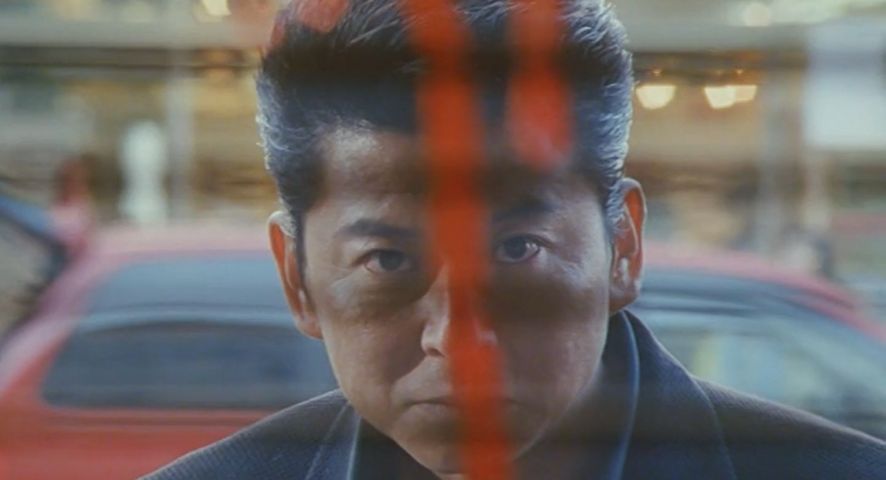
We’re a month and a half into 2025 and I’m initiating phase 2 of my grand plan to be more intellectually healthy this year.
Two of my big goals for the coming (current) year are to watch more movies, read more books, and play more games (and, as a consequence, spend less time on my phone) and to write more. I used to write a lot and have written a little recently and have enjoyed it. Often when I write, I feel required to only do so when I have something to say that I haven’t seen someone else say. I loathe writing things that just repeat what other people have already said, which is a hindrance when everyone is saying things all the time. So, in order to get over that, I’m inventing a contrivance that will force me to write even when the things I have to say have, maybe, been said before.
I’m starting a book club.
Now, “book club” implies that people will join me in experiencing the selected art and discuss it with me but, frankly, I don’t want to do that. If people I know want to read/watch/play the things I’m writing about they’re welcome to, but, if I’ve learned anything over the years, it’s that my taste is, well, niche.
Also, I will not be clinging to any schedule for these posts. I release them when I want to.
In order for a book club to work properly, I need to announce what I’ll be talking about next in advance so that if someone wanted to follow along with me, they would have time to do so. I will be doing that, but I also want to make issue 0 here a little more interesting. As such, I’ll be talking about Gozu, by cinematic visionary Takashi Miike.
Everything I’m about to tell you is a joke. Don’t take it seriously.
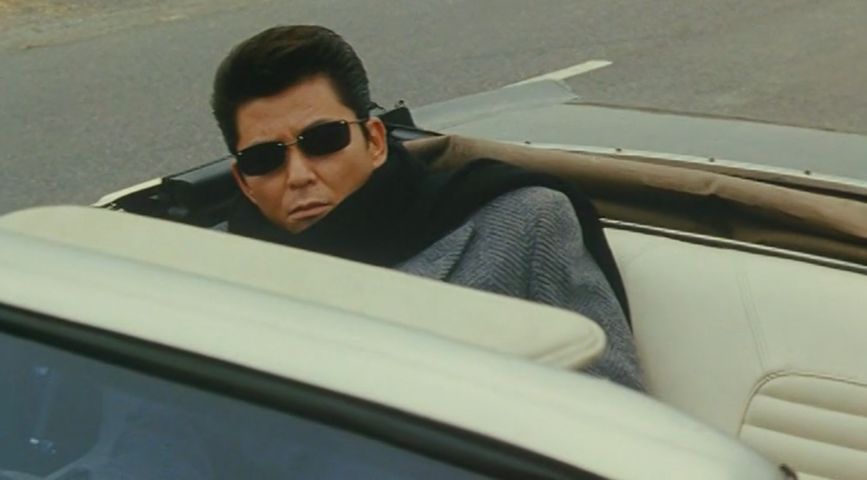
There are two things that make Gozu a great film to start with here. Firstly, I’m just going to assume that most people are not going to watch it, so who cares if I write about it without warning. Gozu is weird, niche, and not available in any high quality official matter. (I watch it on the Internet Archive, but I believe it’s also just been uploaded to YouTube by some random person.) Miike is already a relatively niche filmmaker and Gozu is, at best, his third most popular movie (probably fourth or fifth, though).
Secondly, Gozu is the perfect movie to talk about here because I cannot tell you one thing about what actually happens in it.
Gozu has one, major, colossal, unimaginable plot twist that is so life-altering I could never forgive myself for spoiling it for even one person. I am a different person than who I was before experiencing the plot twist of Gozu.
Normally, I’m not the kind of person who cares about spoilers for a story. I think that if a story is good, it will be magical and enjoyable regardless of whether or not you know what’s coming next. With Gozu, though, I went in blind and I could not imagine allowing someone else to watch Gozu any other way.
I’ll do my best to talk about this movie without revealing any crucial information about it just in case you do leave this wanting to watch Gozu.
If something happens to me, you know what to do.
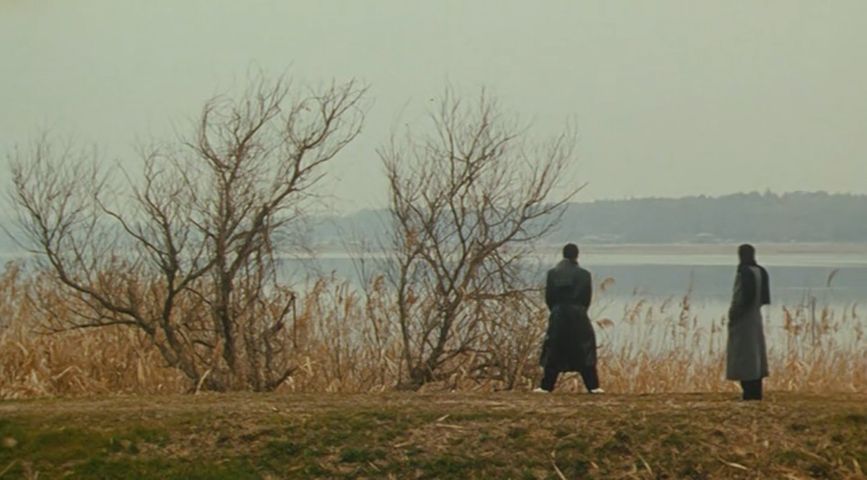
If you know of Takashi Miike, you’ve probably heard of his biggest film, Ichi the Killer. Ichi the Killer is a psycho-sexual yakuza movie about a high ranking yakuza member, Kakihara, who is an extreme masochist, and a serial killer, Ichi, who kills people in elaborate and gory ways. Kakihara becomes obsessed with the idea of meeting and fighting Ichi, ultimately hoping that Ichi will kill him because, well, that’s just the kind of thing Kakihara is into.
Ichi the Killer is most famous for how gory it is. Or, well, was? When the film was screened at the Toronto International Film Festival, they famously gave barf bags out to the audience in case it was too gory for anyone. Cool! Twenty-four years later, though, the gore in Ichi the Killer is significantly funnier than it is violent. The film relies heavily on computer-generated effects for the gore and the film’s 2001 CGI holds up about as well as any low-budget 2001 CGI ever does. It does, however, have one of the funniest reveals I’ve ever seen in a movie.
Without its gore, Ichi the Killer doesn’t have much left. The plot is fine but the half of the plot that concerns Ichi is so packed with needlessly upsetting, problematic content that it’s kind of hard to watch. Kakihara, on the other hand, rules. Kakihara is about as compelling a character as I’ve ever seen. He has raw charisma and a wardrobe. Whoever styled Kakihara deserved an Oscar for their work because that guy serves. Ichi the Killer is, ultimately, a decent movie that you’ll just leave sad that it wasn’t all about Kakihara.
(As a side note, Kakihara was the direct inspiration for Majima Goro from Ryu Ga Gotoku’s Yakuza game franchise. I mention this partly to tell you to play the Yakuza games, which are amazing, but also because THEY GOT TAKASHI MIIKE TO MAKE A FILM ADAPTATION OF YAKUZA!!! If Ichi the Killer interests you, just watch Yakuza: Like a Dragon instead. THAT movie is immaculate.)
One way to understand Ichi the Killer would be to look at it as Miike’s attempt at making something like his own Pulp Fiction. It’s a violent, sexual, transgressive movie that is less about following a plot as much as it is about experiencing its rendition of a criminal underworld and the fascinating characters in it.
Gozu, meanwhile, is commonly described as Miike’s attempt at making a film like David Lynch’s Mulholland Drive.
What’s a dead guy doing serving coffee?
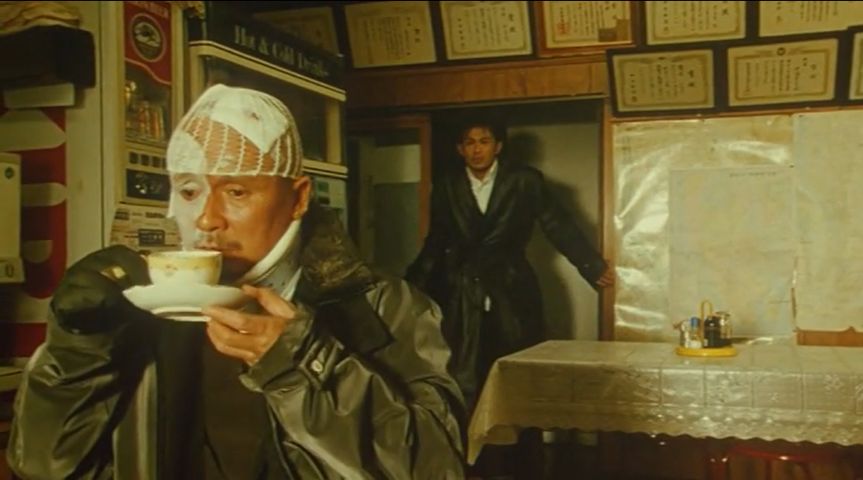
The people who say this are, I’m fairly certain, correct, but it’s probably not the best description of the movie. Takashi Miike probably tried to make his own version of Mulholland Drive, but that’s not what he made. He made Gozu.
See, Takashi Miike makes movies. This dude has ONE HUNDRED AND TWENTY THREE directing credits on Letterboxd and his earliest credit is from 1991. That means that, over his career, Miike has directed ON AVERAGE 3.6 things per year. (He’s credited as a director on TWO feature films released in 2025!!!!!) In order to produce at that level, you need two things: a lot of ideas and absolutely no concern greater than getting something done. This means that Miike’s process mostly seems to be taking ideas, giving them more ideas, and then finishing the thing.
Take Miike’s film, Ace Attorney. Ace Attorney is almost a direct, one-to-one adaptation of the first case from Capcom’s Phoenix Wright: Ace Attorney video game. The only significant change that Miike makes is making the movie cyberpunk. Beyond the film’s serious, near-future dystopian setting, the attorneys have these holographic displays that they can use to present evidence, meaning that the most exciting moments in the movie frequently involve lawyers literally throwing computer UI at each other.
Why does Miike do this? Well he had one idea: make a Phoenix Wright movie. Then he had another idea: gotta contextualize the video game UI in the movie. Then he had a third idea: make it cyberpunk. Problem solved. Then, lastly, finish the movie.
Your wiener looks just like Frankenstein's. But damn if it ain’t as giant as ever. Enchanting.
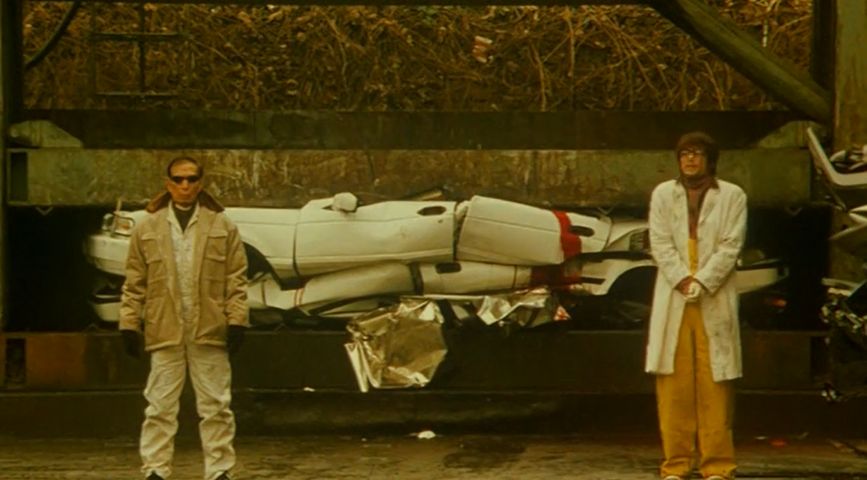
Now imagine how Miike would approach David Lynch’s masterpiece, Mulholland Drive. Idea one: make a Japanese Mulholland Drive. Idea two: continue exploring the ideas that Ichi the Killer didn’t quite realize. Idea three: Gozu.
At least one blog post I found makes an unsourced claim that Sakichi Sato, the writer of both Ichi the Killer and Gozu (and actor of the cross-dressing waiter in Gozu), had somewhere in the ballpark of one to two weeks to write the entire film. He was told that it didn’t need to make sense. Now that’s how you make a feature film.
Gozu has two distinct parts, before and after the twist. Before the twist, Gozu is almost perfectly a Japanese, yakuza version of Mulholland Drive. David Lynch spent his entire career exploring the ways that various, fringe areas of society amplify anxiety and fear. Twin Peaks imagines what happens in a small American town when the evil that lies within people breaks the facade of nuclear America. Mulholland Drive then looks at these very same concepts in LA, examining the corrosion that can attack people as they attempt to actualize their dreams in Hollywood.
Gozu takes a big-city yakuza facing the hardest career choice he’ll ever have to make, and plants him in a small town, one completely detached from his world. Minami, much like Dale Cooper in Twin Peaks, arrives in a suburb of Nagoya facing a turning point in his career, but his own personal interests are starting to bubble up in conflict with his job. Minami must navigate this strange world as his own sense of purpose begins to deviate from the tasks laid out before him.
A friend in need is a friend, indeed.
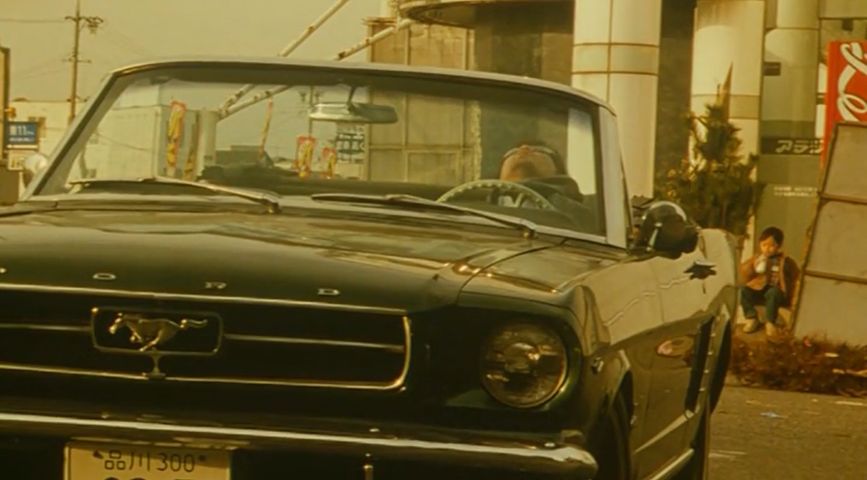
Then the twist happens and the entire plot transforms like no plot transformation I’ve ever seen before. Importantly, the plot doesn’t change, because that would mean that what the movie has been about up to that point is no longer what the movie is. This is not true. Rather, when the twist happens, all of the abstract, strange imagery and feelings happening in the film materialize. Everything lying underneath the surface of Gozu gets yanked up and introduces entirely new levels of subtext underneath it.
I think the best way for me to explain this is to say, cryptically, that there are moments in the first half of Gozu where you will laugh to yourself about something that happens then think “well, wouldn’t it be funny if that happened next?”, but you would never actually expect it to happen. Because what you think is not what movies do. You are wrong. You have been trained over decades to limit your understanding of which stories can be told in which ways.
You’re in the world of Takashi Miike now.
Gozu gets you. The movie understands you.
Gozu gets me. The movie understands me.
I don’t know a lot about much at all, in the grand scheme of things, and I certainly don’t know much about how to properly represent people in movies but if I know just one thing, it’s that Gozu represents me.
You’re going to see a lot of people in reviews say that Gozu doesn’t make any sense. You’ll see them say that Gozu is the weirdest movie they’ve ever seen. You’ll see them say that Gozu has no plot at all. That it’s all just imagery.
These people are cowards. These people are scared to admit what they think Gozu is about. These people don’t think Gozu is allowed to tell the story that it tells.
Next I’m writing about Neon Genesis Evangelion and The End of Evangelion.
Leave it all to aniki. I’m so wet.